


AI in paid media: a business-growth strategy
Connect AI and paid media to business goals, reliable data, and human decisions—without treating automation as a shortcut to results.
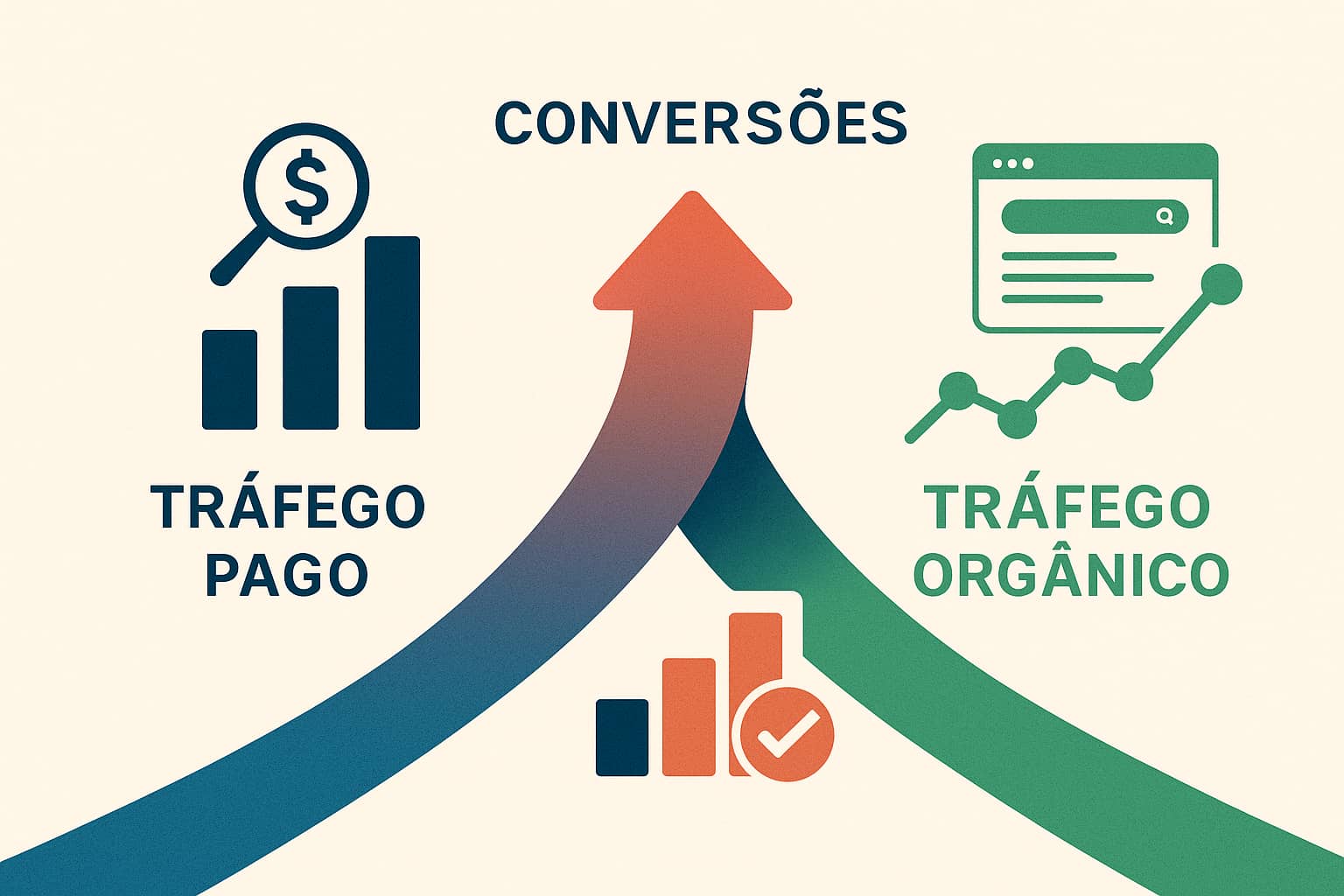
Start with a business goal, not a tool
Choose an AI solution to support a concrete decision: build demand for an offer, improve lead quality, enter a region, or make investment more predictable. Define what the business considers valuable, such as a sales-accepted opportunity or a purchase with sustainable margin. Clicks and impressions can help diagnose a campaign, but they do not replace the business objective.
Before automating, document the current baseline, audience, service constraints, and review horizon. This gives the team a reference for assessing changes and prevents a platform from optimizing an easy-to-record intermediate metric that is disconnected from revenue or operational capacity.
Prepare data and processes for better decisions
Models and ad platforms depend on the signals they receive. Check whether important events are instrumented, forms create consistent records, and downstream outcomes—such as qualification, sale, or cancellation—can be connected to campaigns. Incomplete data does not become reliable simply because an algorithm processes it.
Document definitions and owners before launch: what qualifies as a lead, which system is the source of each field, and how often the data will be reviewed. When volume is low or integrations are not ready, use simple rules and human assessment rather than assigning false precision to automated predictions.
Pair automation with human decisions
Use AI for bounded tasks such as grouping search terms, summarizing reports, suggesting copy variations, or flagging changes worth investigating. The team remains responsible for checking facts, message suitability, platform policies, and alignment with the company’s actual offer.
Set explicit limits on what can be published or changed without approval. Budget, targeting, pricing, and commercial claims call for review in proportion to their risk. A useful workflow records the suggestion, the decision, and the reason, so automation saves effort without obscuring who owns the outcome.
Roll out in stages and learn from evidence
Choose a campaign with a controlled scope, a testable hypothesis, and a review period that fits the buying cycle. Change few variables at a time, preserve a valid comparison where possible, and track business indicators alongside platform metrics. If demand changes with seasonality or sales activity, record that context before attributing a difference to AI.
At the end, decide whether to keep, adjust, or stop the use case based on data quality, observed impact, and operating cost. Document what did not work as well: that evidence guides future tests and prevents repeating automation that merely shifts work to another step.